

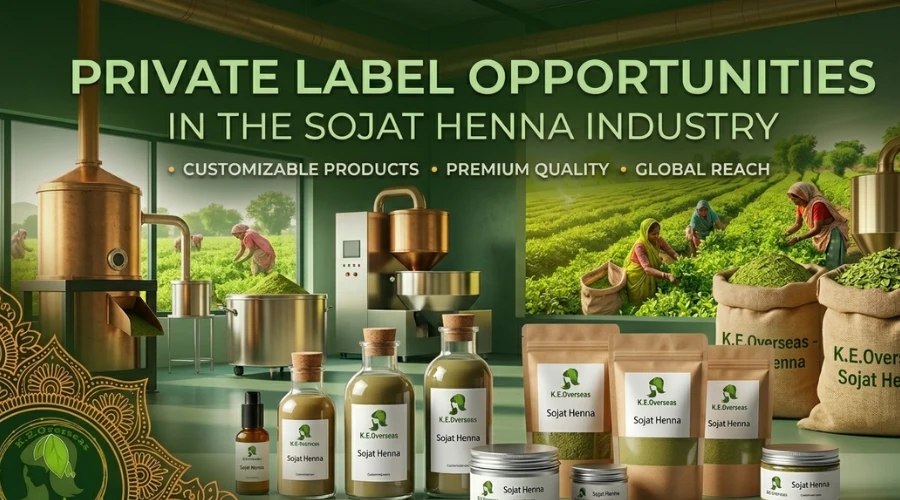
The request landed on my desk three years ago from a cosmetics brand in London that had been searching for months to find a reliable sojat henna powder supplier. They wanted something specific: high-pigment henna sourced directly from the Sojat region, packaged under their own brand name, with documentation that met EU cosmetic regulations. What they encountered instead was a fragmented market full of middlemen, inconsistent quality, and suppliers who could not provide the trace ability documents their compliance team required. That project took six months to execute properly, but it opened my eyes to just how much opportunity exists for businesses willing to navigate the private label sojat mehndi space with the right approach.
If you are researching this channel, you already understand that the global henna market is growing steadily, driven by demand from natural cosmetics brands, holistic beauty retailers, and cultural product companies. But what you might not realize is how underserved many of these buyers are when it comes to accessing quality sojat henna powder through private label arrangements. The gap between what brands need and what traditional exporters provide creates genuine opportunity for businesses that understand the landscape.
Why Sojat Henna Stands Apart
The Sojat region in Rajasthan has earned its reputation for producing some of the finest natural henna in the world. The combination of local climate, soil conditions, and generational farming knowledge creates a product with characteristics that buyers specifically request. When brands ask for sojat mehndi rather than henna from other regions, they are typically looking for the deep burgundy stain profile that Sojat leaves behind, the fine grinding consistency that mixes smoothly, and the lower impurity content that meets cosmetic standards.
Not all sojat henna powder on the market delivers these characteristics consistently. The quality varies significantly depending on harvest timing, leaf processing methods, and storage conditions. A manufacturer who understands these variables can produce a product that consistently performs, which is exactly what private label buyers need when their reputations depend on the final result. Working with a supplier who can articulate and guarantee these quality parameters is the first step to building a sustainable private label relationship.
Private label arrangements allow brands to specify exact requirements rather than accepting whatever grade a supplier decides to offer. You can request specific dye release levels, moisture content percentages, grinding fineness, and packaging standards that align with your product formulations. This level of control matters significantly for companies developing premium henna-based products where consistency directly impacts customer satisfaction and repeat purchases.
Building Your Manufacturing Partnership
Finding a private label henna manufacturer who can operate at the quality level your brand requires involves understanding what separates contract manufacturing from simple product sourcing. The former involves a more integrated relationship where the manufacturing partner participates in product development, regulatory compliance documentation, and supply chain coordination. The latter is essentially purchasing finished product under your label without deeper involvement in how it is made.
For sojat mehndi specifically, the most successful private label arrangements typically involve manufacturers who maintain direct relationships with farming cooperatives in the Sojat region. This matters because henna quality begins at the agricultural level, and suppliers who rely on third-party aggregators often lack visibility into growing conditions and harvest timing. A manufacturer who can trace product back to specific harvest batches provides something valuable to brands: the ability to quality-check and certifystock before committing to larger orders.
Your manufacturing partner should also demonstrate familiarity with the regulatory environment governing cosmetics and personal care products in your target markets. Different regions maintain different requirements for things like heavy metal testing, microbial limits, and labeling declarations. A private label henna manufacturer who has experience supplying to European, North American, or Middle Eastern markets will understand these requirements and build compliance into their processes rather than treating documentation as an afterthought added after production.
Market Positioning for Private Label Brands
How you position your private label sojat henna powder in the market determines the manufacturing specifications you should request and the pricing structure that makes sense for your business model. The premium natural cosmetics segment commands higher pricing but requires corresponding investment in quality certification, sustainable sourcing documentation, and brand storytelling. The volume retail segment typically prioritizes competitive pricing and consistent availability over differentiated growing specifications.
Understanding your position helps communicate clearly with potential manufacturing partners about what matters for your brand. A company targeting boutique wellness retailers needs different product specifications than a brand building inventory for large retail chains. Neither approach is inherently better, but knowing which path you are pursuing allows manufacturers to propose appropriate arrangements rather than offering generic solutions that might not fit your specific circumstances.
The storytelling angle around Sojat henna presents specific marketing opportunities worth considering. Geographic origin, traditional processing methods, and connection to artisan farming communities create compelling brand narratives that resonate with consumers interested in authentic, culturally-rooted products. This positioning requires sourcing verification and often involves visiting manufacturing operations to document practices first hand. Not every brand needs this depth of engagement, but for those targeting the premium natural products segment, it creates meaningful differentiation from commodity henna offerings.
Scaling Your Operation
Initial orders for private label sojat henna powder typically start smaller to allow testing and brand development. As your product gains traction and reorders stabilize, scaling production requires coordination with your manufacturing partner to maintain quality consistency across larger batches. This involves discussing harvest planning, storage capacity, and lead time requirements before you need to place larger orders.
Building inventory buffers into your supply chain planning makes sense for several reasons. Henna harvests occur seasonally, and processing capacity fluctuates accordingly. Transportation and customs clearance times vary, creating inherent variability in delivery schedules. Having a manufacturing partner who can hold reserve inventory on your behalf, or who maintained buffer stock at their facility, provides insurance against supply disruptions that could leave your brand unable to fulfill orders.
Many private label buyers find that establishing quarterly manufacturing schedules rather than reacting to depleting inventory produces better outcomes. Your manufacturing partner appreciates predictable ordering patterns, which often translates to more favorable pricing and production priority. For your brand, it means greater certainty about supply availability and the ability to plan marketing activities around product launches without worrying about stockouts.
Taking Your First Steps
Approaching the private label sojat mehndi market with clear initial requirements produces faster progress than exploratory conversations without specific parameters. Before reaching out to manufacturers, define what matters for your brand: target markets and regulatory requirements, quality specifications that matter for your formulations, packaging needs, order volumes for initial launch, and timeline expectations. Even preliminary versions of these parameters help manufacturers respond with relevant proposals rather than generic capabilities presentations.
Requesting samples before committing to any manufacturing arrangement proves essential. Testing sojat henna powder from different suppliers, even when specifications appear identical on paper, often reveals meaningful differences in actual performance. The only way to evaluate these differences is through hands-on testing using your specific preparation methods and application protocols.
Moving forward with a manufacturing partnership after successful sample evaluation typically involves negotiating terms that protect both parties. Clear quality specifications, testing protocols, payment terms, and exclusivity arrangements all require deliberate discussion. The best private label relationships build over time through demonstrated reliability, but they begin with explicit agreements that establish expectations from the start.
The businesses that succeed in private label sojat henna tend to treat their manufacturing partners as strategic collaborators rather than simply vendors. They communicate openly about market feedback, provide advance notice on order changes, and invest in relationship maintenance that benefits both organizations over time. This approach produces better outcomes for everyone involved, including the end consumers who receive quality products that meet expectations consistently.