

When you apply henna on your hands, you probably never stop to think where does this come from? Who grows it? What makes one henna powder better than another? If you have ever used a deep-coloring, fragrant, and genuinely natural henna paste, there is a very good chance it came from one small city in Rajasthan a city called Sojat. And if you are serious about quality, you already know that Sojat henna powder is not just a product. It is a legacy.
Where Is Sojat and Why Does It Matter?
Sojat is a small town located in the Pali district of Rajasthan, India. It sits about 80 kilometers from Jodhpur and is surrounded by semi-arid land that is, by most standards, not ideal for farming. The soil is dry. The rainfall is low. The summer heat is unforgiving. And yet, this very land produces the finest henna in the entire world.
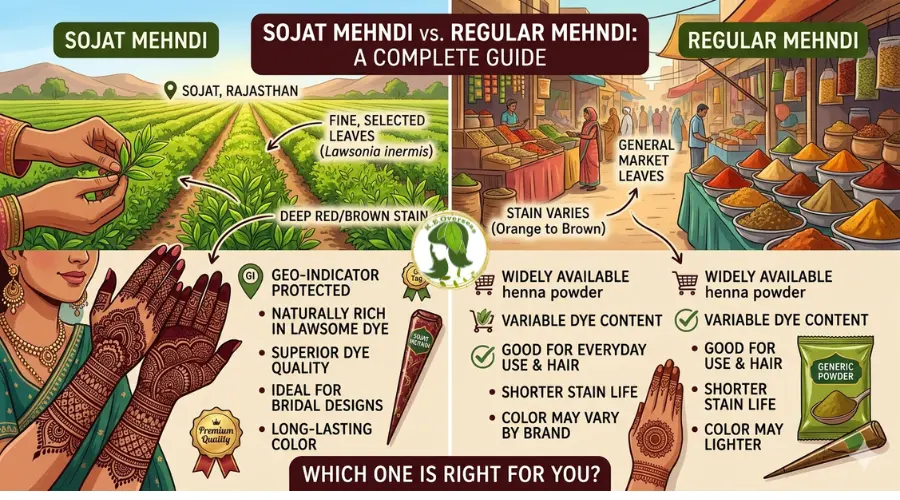
The reason is surprisingly simple. The Lawsonia inermis plant which is the botanical name for the henna plant thrives in hot, dry climates with well-drained sandy soil. Sojat’s geography is almost perfectly designed for it. The combination of dry heat, sandy loam soil, and low humidity creates henna leaves with an exceptionally high concentration of lawsone the natural reddish-orange dye molecule that gives henna its famous staining power.
This is why Sojat henna powder consistently outperforms henna from other regions in terms of color depth, longevity, and purity.
A History That Goes Back Centuries
The story of henna in Sojat is not a modern one. Local records and oral traditions suggest that henna cultivation in this region dates back several hundred years. Rajasthan has always been associated with henna it is woven into the culture of weddings, festivals, and daily life across the state. But Sojat became the commercial and agricultural heart of this tradition over time.
By the 20th century, Sojat had already established itself as the primary trading hub for raw henna leaves across India. Farmers from surrounding villages would bring their harvest to Sojat’s markets, where traders would process, dry, grind, and distribute the powder to buyers across the country and eventually across the world.
Today, Sojat is often referred to as the “Henna Capital of India” and this title is well-deserved. The town handles an estimated 80 to 90 percent of India’s total henna production and export. India itself supplies the majority of the world’s henna, which makes Sojat’s position in the global beauty supply chain genuinely remarkable.
What Makes Sojat Henna Powder Different?
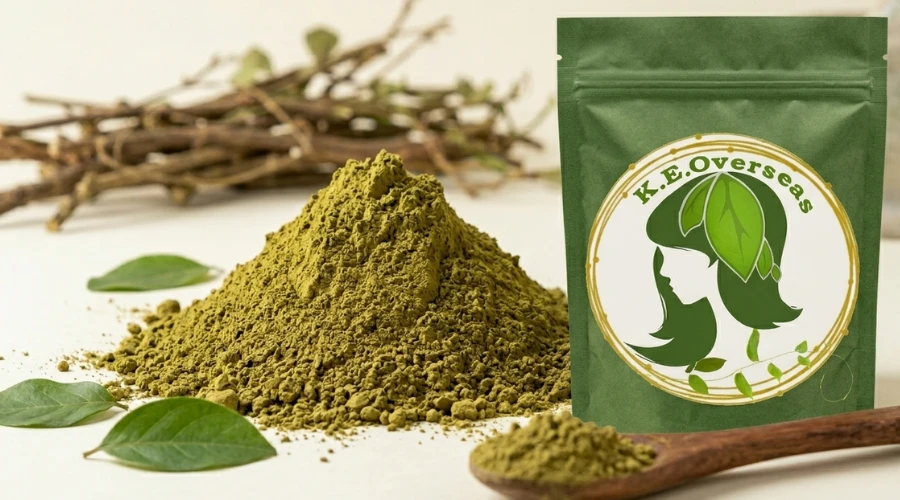
If you have ever compared Sojat henna powder with generic henna available at a local shop, the difference is immediately visible. Genuine Sojat henna powder has a distinctive dark green color almost like dried spinach with a fine, smooth texture and a naturally earthy fragrance. This is what pure, well-processed henna looks like.
The high quality of Sojat henna powder comes from several factors:
High Lawsone Content: The lawsone content in Sojat-grown henna is among the highest in the world often ranging between 2.5% to 3.5% or more. This translates directly into a deeper, more long-lasting stain on skin and hair.
Chemical-Free Processing: Reputable Sojat henna producers follow traditional processing methods harvesting leaves at peak maturity, sun-drying them naturally, and grinding them into fine powder without chemical additives, synthetic dyes, or preservatives. What you get is 100% natural henna in its purest form.
No PPD or Harmful Additives: One of the biggest concerns with low-quality henna products in the market is the presence of Para-phenylenediamine (PPD) a chemical added to create black henna or speed up color release. Genuine Sojat henna powder contains no PPD. It is a safe, plant-based product with no known toxic compounds when used as directed.
Consistent Quality: Because Sojat has such a mature ecosystem from farming to processing to quality control the consistency of the product is high. You know what you are getting every time.
Sojat Today A Town Built on Green Gold
Walk through Sojat today and you will see henna everywhere. The market lanes are lined with shops selling henna in bulk. Factories hum with machines grinding dried leaves into fine powder. Trucks loaded with sacks of henna leave the town daily, headed to ports in Gujarat and Maharashtra for export to the Middle East, Europe, Africa, and North America.
Henna is so central to Sojat’s economy that locals affectionately call it “green gold.” Thousands of families in and around Sojat depend on henna cultivation and trade for their livelihood. From the farmer who grows the crop to the mill owner who processes it to the small exporter who ships it abroad henna is the lifeline of this entire region.
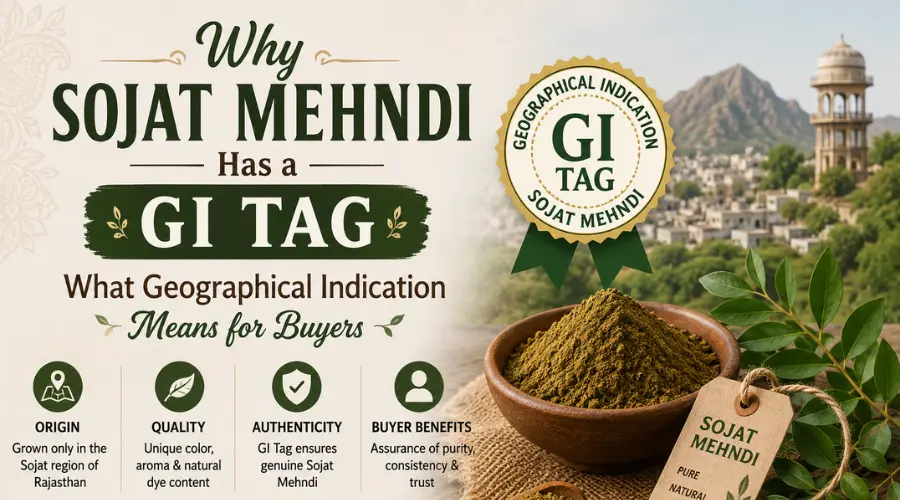
The Rajasthan government has also recognized Sojat’s importance. Sojat henna has received Geographical Indication (GI) status, which means the name “Sojat henna” is legally protected and can only be used for henna produced in this specific region. This is the same kind of protection that Darjeeling tea or Basmati rice enjoys a mark of genuine regional authenticity.
Sojat Henna in the Global Beauty Market
The global henna market has grown significantly over the past decade. Rising demand for natural, chemical-free beauty products has pushed consumers worldwide to seek out plant-based alternatives to synthetic hair dyes and body art products. In this environment, Sojat henna powder has emerged as a premium, trusted ingredient for hair care brands, mehndi artists, and wellness companies globally.
Countries like Saudi Arabia, UAE, the United Kingdom, the United States, and across Africa import large quantities of Sojat henna powder every year. In the Middle East especially, henna is deeply embedded in cultural practices, and the demand for high-quality Sojat henna remains consistent year-round.
Indian e-commerce platforms and global marketplaces like Amazon have also made Sojat henna powder accessible to individual buyers who want authentic, pure henna delivered to their doorstep no more relying on local shops that may sell inferior or adulterated products.
How to Identify Genuine Sojat Henna Powder
With the growing reputation of Sojat henna powder, the market has unfortunately also seen imitation products being sold under similar names. Here is how you can identify the real thing:
Color: Genuine Sojat henna powder is a rich, dark green not yellowish or pale
Texture: It should be very fine, smooth, and free of grit or coarse particles
Smell: Natural and earthy, slightly grassy not chemical or perfumed
Stain Test: Mix a small amount with water and apply on skin genuine henna turns orange initially and deepens to dark brown/maroon over 24-48 hours
Source: Always buy from sellers who clearly state the henna is from Sojat, Rajasthan and ideally carry a GI tag or lab test certificate
Sojat henna powder is not just a beauty product it is the result of centuries of agricultural knowledge, a unique geography, and the hard work of thousands of farmers and traders in a small Rajasthani town. When you choose Sojat henna, you are choosing purity, tradition, and quality that the rest of the world has come to recognize and trust.
Whether you are using it for bridal mehndi, hair coloring, skin care, or export trade understanding the story behind Sojat henna powder only deepens your appreciation for what makes it truly special.