

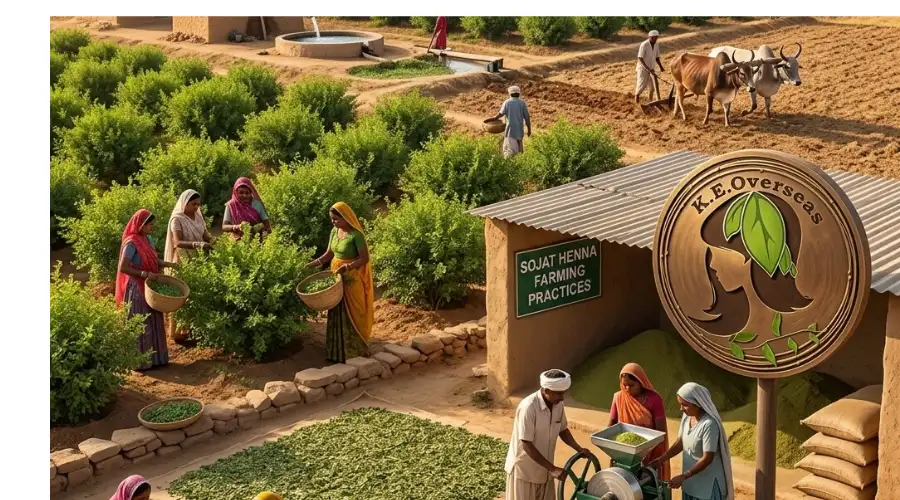
Henna has been a beauty staple for ages, from intricate mehndi designs to natural hair dyes. But not all henna is equal. Sojat henna powder, hailing from the arid lands of Rajasthan, India, stands out for its superior quality and vibrant color. What makes it special? It’s the organic farming practices rooted in Sojat’s soil. Sojat henna powder manufacturers rely on these time-tested methods to produce pure, chemical-free powder that’s safe and effective. Let’s dive into the world behind this golden crop.
The Unique Terroir of Sojat
Sojat, in Pali district, is henna heaven. Its black cotton soil, rich in minerals, holds moisture perfectly despite low rainfall. This “terroir” – like in wine – gives Sojat henna powder its signature deep red-orange hue and conditioning properties. Farmers here have grown Lawsonia inermis (henna plant) for generations, passing down knowledge.
Organic farming in Sojat means no shortcuts. Sojat henna powder manufacturers source exclusively from fields free of synthetics, ensuring the powder retains natural lawsone, the dye molecule that colors skin and hair without harm.
Seed Selection and Organic Planting
It all starts with seeds. Sojat henna powder comes from heirloom varieties selected for disease resistance and high lawsone content (up to 1.5-2%). Farmers hand-pick seeds from the healthiest plants, soaking them in cow urine – a natural biostimulant – before sowing.
Planting happens in monsoon (July-August). No GMOs or hybrids; just pure organic strains spaced 2-3 feet apart. This allows roots to tap deep groundwater, making plants drought-hardy. Sojat henna powder manufacturers test batches for genetic purity, guaranteeing authenticity.
Soil Health Without Chemicals
Forget chemical fertilizers. Sojat farmers build soil fertility naturally. They use vermicompost from earthworm pits, enriched with neem cake and cow dung. Crop rotation with legumes like moong beans fixes nitrogen, while green manures like dhaincha smother weeds.
Soil pH is maintained at 7-8 with lime from local shells. Regular testing ensures micronutrients like iron and zinc thrive key for Sojat henna powder’s conditioning silkiness. Sojat henna powder manufacturers demand organic certifications like NPOP or USDA, verifying no prohibited substances.
Water Management: Drip and Mulching
Water is gold in Sojat’s semi-arid climate (300-400mm rain yearly). Organic practices shine here. Drip irrigation delivers water directly to roots, saving 60% compared to flooding. Mulching with dried leaves or straw conserves moisture and suppresses weeds.
Farmers follow “pausakala” planting aligned with lunar cycles for optimal uptake. Rainwater harvesting tanks store monsoon bounty. This eco-smart approach yields robust plants, producing premium leaves for Sojat henna powder manufacturers.
Natural Pest and Disease Control
Pests like aphids or leaf miners? No pesticides. Sojat henna powder stays pure thanks to neem oil sprays, tobacco decoctions, and garlic-chili mixes. Beneficial insects like ladybugs are encouraged via flowering borders of marigolds.
Diseases like powdery mildew are tackled with buttermilk sprays (lactic acid fungi fighter). Intercropping with garlic repels nematodes. Farmers scout fields daily, using pheromone traps for monitoring. Sojat henna powder manufacturers conduct HPLC tests to confirm zero pesticide residues, meeting global standards.
Hand-Harvesting for Quality
Harvest time (October-February) is labor-intensive. Leaves are hand-plucked at peak maturity – when lawsone peaks – using sickles. No machines; this preserves leaf integrity. Only 40-50% of leaves are taken per plant, allowing regrowth for 3-4 harvests yearly.
Timing is crucial: morning picks avoid dew, preventing mold. Leaves dry in shade on clean racks, retaining color. Sojat henna powder manufacturers buy only from certified organic farms, sorting premium grades (body art vs. hair).
Traditional Drying and Processing
Post-harvest, leaves sun-dry for 3-5 days on bamboo mats, flipped regularly. No ovens or chemicals – just pure solar power. Dried leaves sift through wooden sieves to remove stems.
Grinding happens in stone mills or hammer mills at low speeds to avoid heat damage. The result? Fine Sojat henna powder (80-100 mesh), sifting like talc. Sojat henna powder manufacturers add triple-sifting for ultra-smooth texture, ideal for pastes.
Quality Control by Manufacturers
Sojat henna powder manufacturers elevate farming practices. They provide free training on organic methods, buyback guarantees, and soil kits. Labs test for lawsone (1.2% min), microbial load (<10^4 CFU/g), and heavy metals.
Packaging in biodegradable bags with oxygen absorbers keeps freshness. Traceability via QR codes lets buyers scan farm origins. Certifications like Cosmos Organic boost trust.
Sustainability and Farmer Livelihoods
Organic Sojat henna powder farming regenerates land. No-till methods build humus, sequestering carbon. Biodiversity thrives with henna hedges sheltering birds and bees.
Sojat henna powder manufacturers form cooperatives, offering fair prices (20-30% above market). Women-led groups empower locals, with training in value-add like henna cones. This cuts middlemen, boosting incomes by 50%.
Health and Environmental Benefits
Chemical-free Sojat henna powder is hypoallergenic, cooling for skin, and strengthens hair follicles. Studies show it reduces dandruff better than synthetics. Environmentally, it avoids groundwater pollution from nitrates.
Consumers get vibrant, long-lasting color – 4-10 days on skin, weeks on hair – without PPD risks.
Challenges and Solutions
Organic yields can be 20% lower initially. Sojat henna powder manufacturers counter with premium pricing and subsidies for compost units. Climate change brings erratic rains; solar pumps and contour bunding help.
Pests evolve; IPM (Integrated Pest Management) rotates remedies effectively.
Global Demand and Export Standards
Sojat henna powder rules 70% of the world’s premium market. Exports to US, EU demand IFRA compliance. Manufacturers invest in cleanrooms, ensuring Sojat henna powder meets vegan, halal specs.
Trends like clean beauty fuel growth think henna shampoos, tattoos, even pet dyes. The organic farming practices behind Sojat henna powder blend tradition, science, and sustainability. From seed to sieve, every step ensures purity. Sojat henna powder manufacturers bridge farms to the world, delivering nature’s finest. Next time you use henna, thank Sojat’s earth – it’s the real ma